ホーム/ニュース/Innovation in Heavy Cable Handling: How Open Protection Rollers Solve Efficiency and Safety Bottlenecks in Large-Section
Innovation in Heavy Cable Handling: How Open Protection Rollers Solve Efficiency and Safety Bottlenecks in Large-Section
April 13, 2026
Introduction: The Underestimated Step, The High Cost
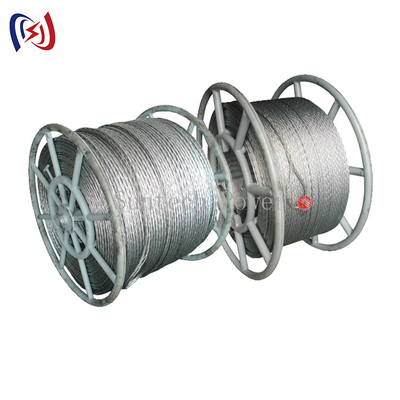
In the construction of mines, power plants, large offshore platforms, and heavy industrial facilities, the installation of large-section power cables is a critical path activity. However, the "first hundred meters"—where the cable is paid off multi-ton reels and pulled to distant terminations—is often plagued by inefficiency and safety hazards. Traditional methods using makeshift stands, wooden blocks, or direct ground dragging result in slow pay-out, severe cable jacket abrasion, high manual labor intensity, and the risk of heavy reel tip-over. The open protection cable roller emerges as a systematic innovation for this fundamental yet challenging task.
The Problem: The Triple Challenge of Large-Section Cable Pay-out
Paying out large-section (typically >80mm diameter), heavy cables presents three main challenges:
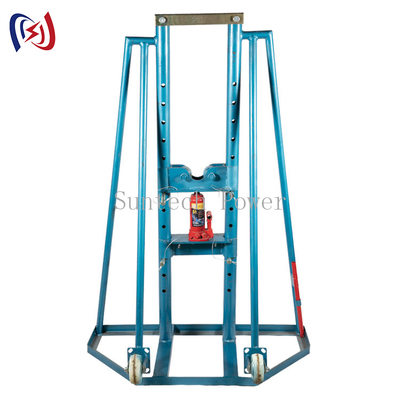
Deployment Efficiency Bottleneck: Traditional threaded-spindle rollers or stands require lifting the multi-ton reel and laboriously threading a shaft through its core. This process needs crane coordination, is time-consuming, and difficult in confined spaces. Threading the cable itself through fixed roller sets is also arduous.
High Risk of Cable Damage: Direct dragging of the cable over hard, uneven surfaces (concrete, steel plate, gravel) causes severe sliding friction against its thick jacket (e.g., HDPE, PUR), leading to deep scoring, localized thinning, or even breaches. These damages are potential initiation points for future insulation failure.
Operational Safety Concerns: Manually maneuvering heavy reels is strenuous and hazardous. Improvised supports are unstable; rapid pay-out or uneven pulling can cause a multi-ton reel to tip over, risking serious injury and equipment damage.
The Solution: The Engineered Design Logic of Open Protection Rollers
Open protection rollers are not merely enlarged rollers; they are a complete engineered system designed around these pain points:
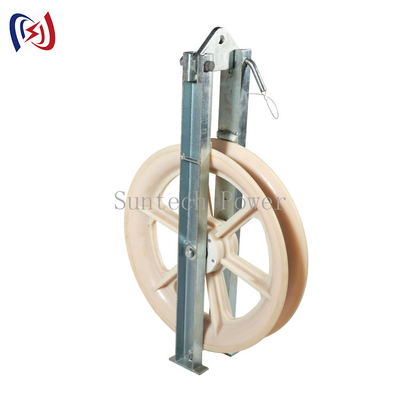
Open Structure, Revolutionizing Deployment: Their key feature is a top-open or side-hinged design. Operators no longer need to move the heavy reel or thread a shaft. Instead, a forklift or sling can place a coil of cable laterally into the roller's curved support channel, or a side panel is opened for placement. This reduces deployment time from hours to minutes, solving the "first-mile" efficiency bottleneck.
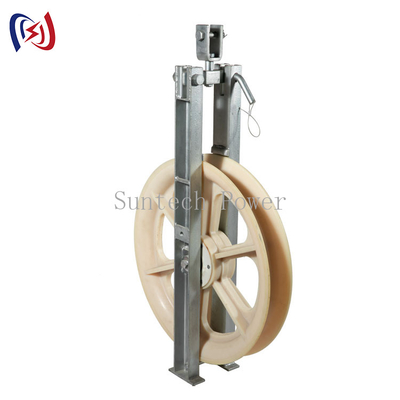
Full-Containment Protection, Eliminating Ground Abrasion: Unlike simple rollers with point contact, open protection rollers typically feature a wide U or V-shaped channel with high side guards. The cable is fully contained within this channel, isolated from the rough ground. The channel is lined with a polyurethane layer of around 85A Shore hardness, providing a soft yet firm support surface. During pay-out, the cable only experiences rolling contact with the smooth, protective polyurethane, fundamentally eliminating jacket damage from sliding friction.
Key Parameter 1: High-Load Steel Frame. To support multi-ton cable coils, the frame must be extremely robust. A frame constructed from welded square hollow section (SHS) steel with a wall thickness of no less than 4mm offers high bending and torsional rigidity. A roller rated for a static load capacity of 1500 kg signifies its structure is calculated and tested to safely handle that weight, ensuring no structural deflection or instability even under dynamic pay-out loads. This is the foundation of safety.
Key Parameter 2: Heavy-Duty Sealed Bearing System. Smooth rolling is key to reducing pulling force and protecting the cable. Using heavy-duty, double-sealed deep groove ball bearings (e.g., 6205-2RS) as the roller core ensures the internal grease is protected long-term in dusty, damp site conditions. This design guarantees very low rolling resistance, making manual or mechanical pulling easier and enabling long-term maintenance-free operation.
Selection and Application Guidelines
When selecting such rollers for heavy cable work, focus on these matching criteria:
Load Matching is Paramount: Estimate the maximum weight of a single cable coil to be paid out. Select rollers with a rated load capacity that provides at least a 50% safety margin. For a 3-ton coil, choose rollers with ≥4500kg capacity or use multiple rollers to distribute the load.
Size Matching is Critical: The roller's channel width and depth must accommodate the cable's outer diameter, allowing it to roll freely without binding. An adjustable width design offers greater adaptability.
Deployment Planning: For long pay-out routes, place rollers every 10-15 meters to form a continuous "aerial track," keeping the cable completely off the ground.
Conclusion
Optimizing the large-section cable pay-out process is a leverage point for improving the quality, safety, and efficiency of entire power installation projects. Open protection cable rollers, with their revolutionary top-loading design, fully protective channel, and robust core of high-load steel construction and heavy-duty bearings, transform this traditionally high-risk, low-efficiency task into a controlled, efficient, and safe standardized procedure. It is more than a tool; it is a practice that pushes heavy industrial installation toward higher engineering standards. Investing in such specialized equipment is, in essence, an investment in lower long-term operational risk, higher on-site safety, and more predictable project timelines.